Short-Term Wins vs. Long-Term Success: Integration Roadmaps

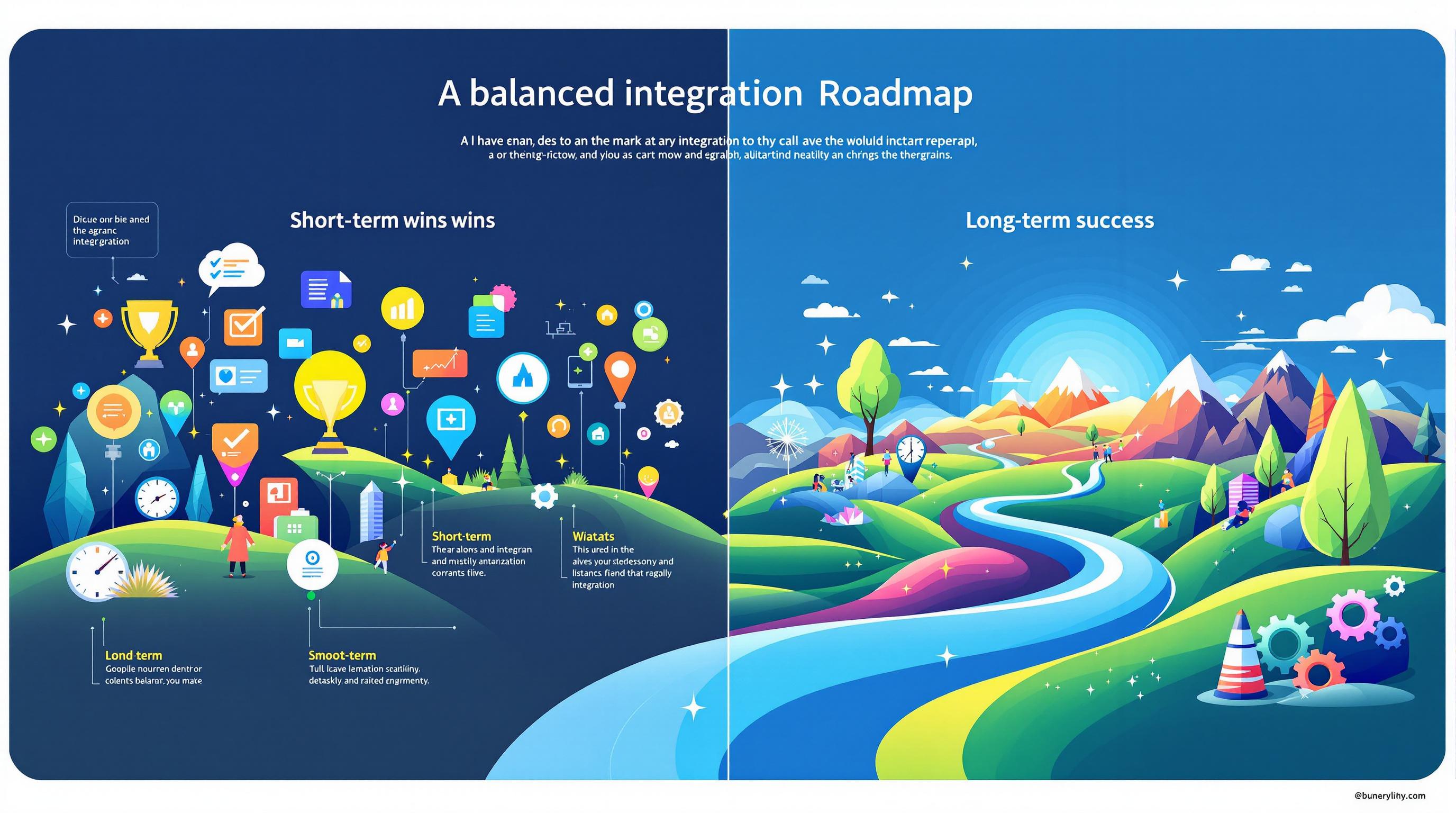
Balancing quick results with future growth is the key to effective integration. Companies often face a trade-off: short-term wins deliver fast outcomes but can limit scalability, while long-term strategies require upfront effort but ensure future adaptability.
Here’s how to strike the balance:
- Short-Term Goals: Quick deployment, fast ROI, and simple setups to address immediate needs.
- Long-Term Planning: Scalable designs, reduced future risks, and flexibility for growth.
- Unified API Approach: Tools like Endgrate streamline integrations, combining rapid rollouts with future-ready systems.
Quick Comparison:
| Aspect | Short-Term Wins | Long-Term Success |
|---|---|---|
| Timeline | Weeks | Months or longer |
| Cost | Lower upfront, higher maintenance | Higher upfront, lower long-term |
| Flexibility | Limited | High |
| Scalability | Hindered | Seamless |
Planning a Successful IT Integration Roadmap after a Merger ...
Short-Term vs Long-Term Integration Goals
When planning integration strategies, SaaS companies often need to strike a balance between achieving quick results and building systems that can grow with their business.
Immediate Integration Results
Short-term goals aim to deliver fast outcomes, enabling businesses to see results quickly and justify their investment. These projects focus on speed and efficiency.
Key features of short-term integration projects include:
- Quick Deployment: Systems are up and running in just weeks.
- Fast ROI: Reduces manual work and boosts efficiency almost immediately.
- Ease of Adoption: Simple setups make it easy to gather feedback quickly.
However, focusing solely on short-term wins can limit flexibility down the line.
Long-Term Planning
To address these limitations, long-term integration strategies focus on building systems designed for scalability and adaptability. This approach ensures the infrastructure can handle future growth and evolving needs.
Key differences between short-term and long-term approaches include:
- Timeline & Focus: Long-term planning prioritizes scalable system design over quick returns.
- Investment & Risk: It involves more upfront effort and design but reduces risks associated with future upgrades.
- Flexibility & Reach: Long-term solutions are built to adapt and integrate seamlessly, avoiding isolated fixes.
A balanced strategy often combines short-term wins with long-term planning. By leveraging integration platforms, companies can:
- Maximize Resources: Free up time and funds, letting teams focus on their primary product.
- Stay Adaptable: Adjust to new business needs without overhauling systems.
- Scale Smoothly: Grow operations without making major infrastructure changes.
For example, Endgrate's unified API supports both rapid deployments and scalable, future-ready architectures.
Impact Analysis: Quick Wins vs Future Growth
Integrations offer both immediate advantages and long-term challenges. Businesses often grapple with the decision between achieving fast results and planning for sustainable growth.
Short-term solutions can deliver fast results but often come with hidden downsides that emerge later. Temporary fixes may turn into long-term burdens, increasing maintenance needs over time.
On the other hand, long-term integration strategies require more effort and resources upfront. However, they typically result in a stronger system that's easier to maintain and offers more flexibility for future growth.
Cost-Benefit Comparison
When deciding between short-term fixes and long-term strategies, keep these factors in mind:
- Initial vs. ongoing costs: Quick solutions usually cost less upfront but lead to higher maintenance and rework expenses over time.
- Scalability and flexibility: Short-term fixes might hinder future growth, while carefully planned strategies allow for smoother scaling and customization.
- Technical debt and user experience: Rapid fixes often increase maintenance needs and can negatively affect user satisfaction in the long run.
The choice of integration strategy affects more than just finances. Companies that rely heavily on quick fixes often place an increasing burden on their development teams to maintain and update these solutions.
Adopting a unified API strategy, like the one offered by Endgrate, can provide immediate results while also supporting long-term growth and scalability.
Next, we’ll explore how to create an integration plan that balances these trade-offs effectively.
sbb-itb-96038d7
Building a Balanced Integration Plan
After assessing costs and benefits, focus on a plan that delivers results while balancing short-term and long-term goals.
Results-Based Planning
Define specific metrics for each phase to monitor progress and adjust priorities as needed. A well-thought-out integration plan should include:
- Focusing on core features by collaborating with an integration provider.
- Leveraging existing tools to minimize development time and costs.
- Creating scalable solutions that don’t require complete rewrites down the line.
Integration Tools and Systems
Modern integration platforms make development faster and prepare your system for future growth. Here’s what to consider:
- Use a single API to streamline development and reduce ongoing maintenance.
- Quickly configure integrations while keeping options open for future adjustments.
- Prioritize security from the start to meet compliance requirements over time.
- Tap into developer support for faster rollouts and to minimize technical debt.
Up next, we’ll dive into team coordination strategies to ensure your integration efforts succeed.
Endgrate platform overview: Outsource integrations and leverage a single API for multiple use cases. https://endgrate.com
Team Coordination for Integration Success
Creating a plan is just the starting point - teams working together effectively are what make it happen. Once you’ve mapped out a solid integration plan, the next step is aligning your teams to tackle both short-term tasks and long-term goals.
Collaboration across different teams ensures that immediate wins don’t come at the expense of future scalability.
Team Goal Alignment
Successful integration depends on smooth teamwork between product teams, developers, and stakeholders.
Developing a Unified Strategy
Set up clear communication channels to ensure everyone is aligned with the integration goals. Regular cross-functional meetings are key to keeping teams on the same page, whether it’s for immediate tasks or long-term strategies.
Making the Most of Resources
Platforms like Endgrate streamline integration tasks, allowing teams to focus on their primary responsibilities.
Here’s how different teams contribute:
- Product teams: Define features, gather user feedback, and create plans for scalable growth.
- Developers: Quickly deploy integrations, refine system architecture, and reduce technical debt.
- Stakeholders: Address pressing business needs while steering the company toward long-term market goals.
Collaborating on Implementation
Teams should work together to establish standardized data models across systems to ensure consistency and efficiency.
Keeping Priorities Balanced
While chasing quick wins, it’s crucial to stay focused on the bigger picture and long-term goals.
Conclusion
As outlined in the Team Coordination section, aligning the goals of product teams, developers, and stakeholders between short-term deployments and scalable infrastructure leads to faster ROI and long-term growth. Endgrate's unified API reduces integration challenges, allowing for quick rollouts, strong security measures, and tailored workflows. This approach delivers immediate results while preparing for future needs.
Related posts

Ready to get started?
